Building an Accessory Dwelling Unit (ADU) is a significant investment, so the “how long?” question usually comes down to one thing: when can I actually start using it?
In 2026, the process in Los Angeles has become much more structured thanks to new state-level “shot clock” mandates, but it remains a long-term project. While the city has removed many of the old bureaucratic hurdles, construction in a high-density market like LA still requires careful planning and patience. Every property has its own quirks—from hillside drainage to aging utility lines—so timelines can vary.
Here is an honest, phase-by-phase breakdown of what a year in your life looks like when building an ADU with us.
Phase 1: Design & Strategy (1–2 Months)
This is the stage we have the most control over. We aren’t just creating drawings; we’re determining the physical and legal “logic” of your lot. In 2026, the strategy you choose here sets the pace for the entire project.
The Blueprint: You have two main options. Fully custom designs allow for total personalization but require more back-and-forth. Alternatively, Los Angeles now offers a robust Standard Plan Program. Using these pre-approved “Standard Plans” can shorten this stage because the structural framework has already been reviewed by the city.
The Feasibility Study: We evaluate the unseen factors. Are your existing sewer lines sufficient? Does the soil in your neighborhood require a specialized foundation?
The Goal: Our aim is to submit plans that are so precise that we minimize the need for “corrections” later. In 2026, a clean submission is the key to a smooth permitting process.
Phase 2: Permitting and the "Shot Clock" (2–4 Months)
Permitting is historically the part of the project that feels the longest because the timeline moves out of your hands. However, recent legislation has added much-needed structure to the process.
The 60-Day Mandate: Under current law, the Los Angeles Department of Building and Safety (LADBS) must review a complete ADU application within 60 days. Using a pre-approved Standard Plan can reduce that review to as little as 21–30 days.
The Reality: Even with these “shot clocks,” factors like Coastal Zone reviews, Historic District requirements, or Hillside ordinances can add time. We stay in close contact with plan checkers to ensure your project keeps moving.
Proactive Preparation: While the city is reviewing the paperwork, we remain proactive. We use this window to order long-lead materials—windows, appliances, and custom cabinetry. Even in 2026, supply timelines can be unpredictable; preparing during permitting ensures that when the permit is issued, construction can proceed immediately.
Phase 3: Active Construction (4–8 Months)
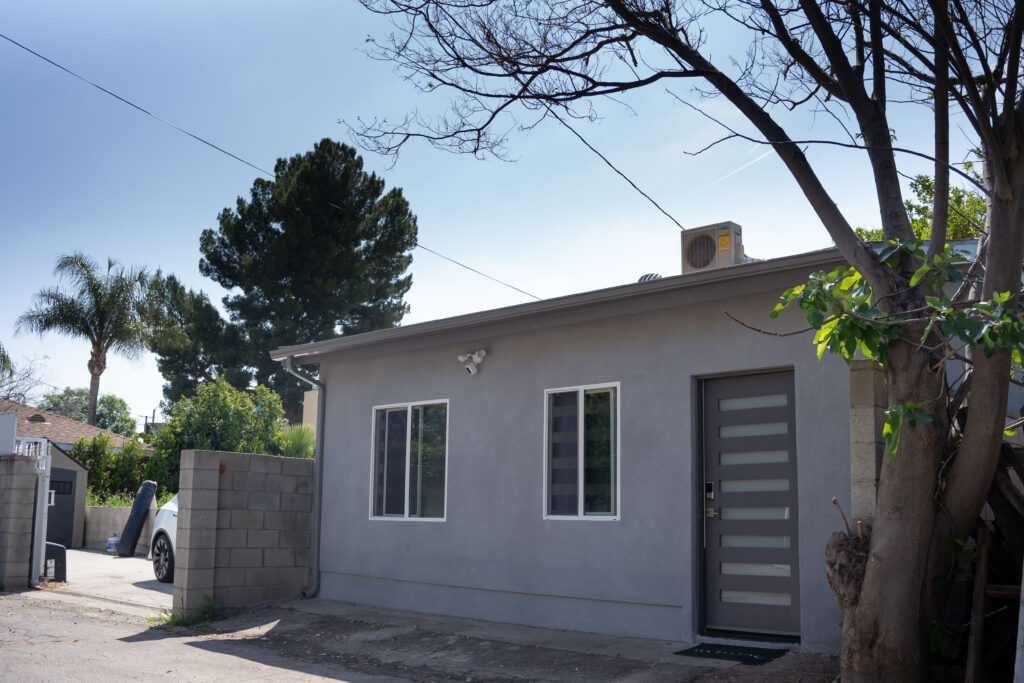
Once the permit is issued, the “construction zone” officially begins. This is when you’ll see the most activity in your backyard. The duration depends on the type of ADU you’ve chosen.
Garage Conversions (3–5 Months): These are typically the fastest. Since the structural shell is already in place, the focus is on plumbing, electrical, and interior finishes.
Detached New Builds (6–8 Months): These are ground-up homes. We handle excavation, foundation, framing, roofing, and utility connections. While it takes longer, this option offers maximum privacy and design flexibility.
Inspections: At key milestones—foundation, framing, and final finishes—the city inspects the work. We coordinate these visits so construction remains on schedule.
Why the Design-Build Approach Matters
Hiring separate architects and contractors can create delays and miscommunication. With a Design-Build team, the person who designed the unit is the same one overseeing construction.
No Lost Time: On-site issues can be resolved immediately by the same team.
Budget Efficiency: We design with cost in mind from the start, preventing expensive surprises later.
The Bottom Line: Your Year of Transformation
From our first meeting to handing over the keys, the total estimated timeline is 9 to 12 months. This is an average—each project varies based on lot complexity, ADU type, and other factors.
It requires patience to have a construction crew on your property for several months, but the result is a permitted, high-quality ADU. This addition provides long-term value, flexibility, and potential income for years to come.
FAQ
1. How long does the city take to approve permits?
In 2026, Los Angeles is required by state law to act on completed ADU applications within 60 days. If we use one of the city’s pre-approved “Standard Plans,” that review time can often be even shorter.
2. Will my property taxes go up?
Building an ADU does not trigger a reassessment of your entire property. The city uses a “blended assessment,” meaning only the value of the new construction is added to your current tax bill. Your primary home’s tax base stays the same.
3. Do I have to live on the property?
No. Under current 2026 laws, “owner-occupancy” requirements are suspended for full ADUs. You can legally rent out both the main house and the ADU to different tenants while living elsewhere.
4. Do I need to add parking for the ADU?
In most cases, no. If your property is within a half-mile of public transit—which covers a large portion of Los Angeles—the city cannot require you to add new parking spaces or replace a garage that was converted into an ADU.
5. Are solar panels mandatory?
For brand-new, detached buildings, yes. To meet 2026 energy standards, new detached ADUs must include solar. Most garage conversions are exempt unless you are significantly expanding the original roofline.