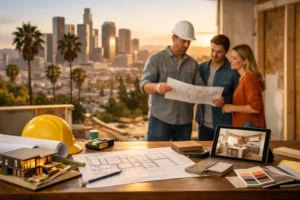
A kitchen remodel in Los Angeles can start with a simple idea – open the layout, add storage, bring in more light – and quickly turn into a maze of designers, engineers, permit questions, and contractor bids. That is why design build remodeling Los Angeles homeowners often prefer has become the smarter path for busy households. Instead of managing separate professionals and hoping everyone stays aligned, you work with one team from concept through construction.
That shift matters more here than in many other markets. Homes across Los Angeles County range from older properties with hidden conditions to hillside residences, compact urban lots, and high-value homes where every finish and floor plan decision affects both daily life and long-term value. A remodeling process that looks organized on paper can fall apart fast if design, budgeting, and buildability are not connected from the beginning.
What design build remodeling means
In a traditional remodel, a homeowner may hire a designer first, finalize plans, and then shop those plans to contractors. That can work, but it often creates gaps. A design may be beautiful yet over budget. A contractor may flag structural or permitting issues after the plans are done. Changes then ripple backward, costing time and money.
With design build remodeling, the same company handles design, planning, pricing, permits, and construction under one roof. The goal is not just convenience. It is coordination. When the people drawing the plans are in step with the people building them, you get decisions grounded in real construction knowledge, realistic allowances, and a clearer path to completion.
For homeowners, the biggest benefit is fewer handoffs. You are not stuck relaying messages between separate firms or trying to sort out who is responsible when something changes. There is one point of accountability and a process built to keep design intent, budget, and execution aligned.
Why design build remodeling Los Angeles projects benefit from one team
Los Angeles remodels rarely happen in a vacuum. The house may need foundation work, panel upgrades, new plumbing lines, or layout changes that trigger plan revisions. Permit timelines can vary by scope and city. Neighborhood expectations can also shape decisions, especially in areas where homeowners care about resale value, architectural consistency, and efficient use of square footage.
That is where the design-build approach earns its value. Early collaboration helps uncover constraints before they become expensive surprises. If a homeowner wants to expand a kitchen into an adjacent room, the team can evaluate structure, mechanical systems, and city requirements while the design is still flexible. If the budget is better spent on cabinetry and layout rather than moving every utility line, that conversation happens early instead of after demolition.
This does not mean every project becomes easier. It means the difficult parts are addressed sooner, with fewer disconnects between planning and field conditions.
The real advantages for homeowners
The first advantage is clearer budgeting. When a project is designed with input from the build team, material selections, labor demands, and permit considerations are discussed in context. That helps reduce the common problem of falling in love with a design that never matched the budget.
The second advantage is schedule control. Remodeling always involves variables, especially in older homes, but one coordinated team can usually respond faster than several separate parties. Questions move through one system. Revisions are tracked internally. Site conditions can be addressed without turning every issue into a chain of emails between outside firms.
The third advantage is homeowner peace of mind. Most people are not looking to become project managers. They want a reliable process, a detailed estimate, regular communication, and a team that respects their home while keeping the work moving. A design-build company is set up for that kind of start-to-finish responsibility.
Where this model works especially well
Some projects benefit from design-build more than others. Kitchen remodeling is a strong example because layout, plumbing, electrical, finishes, appliances, and storage planning all need to work together. Bathroom remodels also benefit, especially when homeowners want better function in a limited footprint.
Room additions, ADUs, and garage conversions are often even better candidates. These projects involve heavier coordination with plans, engineering, permits, and utility considerations. Backyard renovations can also benefit when they include multiple scopes such as hardscape, outdoor kitchens, shade structures, drainage, and lighting.
Smaller cosmetic projects may not need the same level of integration. If you are only replacing finishes without changing layout or systems, a simpler construction path might be enough. But when function, structure, permitting, and design all intersect, a unified team usually delivers a smoother result.
What to expect from a good design-build process
A solid process usually begins with a consultation focused on goals, timeline, priorities, and budget range. This is where a homeowner should be honest about what matters most. Better flow for entertaining, a safer bathroom for aging in place, an ADU for rental income, or a garage conversion for flexible family space all lead to different design decisions.
Next comes site evaluation and preliminary planning. The team reviews the existing conditions, discusses feasibility, and starts shaping the project around both lifestyle goals and physical realities. At this stage, experienced contractors do something valuable: they point out trade-offs. Expanding a footprint may deliver more space but increase permit complexity. Moving a kitchen may improve layout but drive up plumbing and electrical costs. Sometimes the better answer is not the biggest one.
After that, design development and pricing become more detailed. Material levels, scope boundaries, and construction assumptions should become clearer, not vaguer. This is also when transparency matters most. Homeowners should understand what is included, what allowances apply, and where unforeseen conditions could affect cost.
Permitting follows for projects that require it, and then construction begins with project management overseeing scheduling, communication, quality control, and progress updates. The best experience is not just about beautiful finished work. It is about being informed throughout the process.
How to choose the right design-build contractor
Not every company that offers design and construction delivers true integration. Some still operate in silos, and homeowners feel the disconnect. A strong design-build partner should be able to explain its process clearly, define who manages what, and show how estimates, selections, permits, and field execution connect.
Look for a contractor that is licensed, insured, organized, and responsive from the first conversation. Pay attention to how they answer practical questions. Do they talk openly about timelines and possible delays? Do they explain permit realities without overselling certainty? Do they give thoughtful feedback on your goals, or simply agree to everything?
Craftsmanship matters, but so does management. A beautiful rendering is not enough if the build phase becomes disorganized. Likewise, a capable construction crew is not enough if the planning was rushed. The right partner combines design awareness, construction discipline, and clear communication.
For many homeowners, family-owned service also matters. There is a difference between being treated like a job number and being treated like a client whose home, budget, and daily routine deserve respect. That is one reason companies like Level Up Contractor focus on hands-on oversight rather than volume-driven production.
Common concerns and honest answers
One concern homeowners have is cost. Is design-build more expensive? Sometimes the upfront planning investment can look higher compared with hiring a contractor after rough sketches or informal ideas. But that comparison can be misleading. Better coordination often reduces redesigns, change orders tied to preventable issues, and costly misalignment between plans and construction.
Another concern is creative control. Some people worry that working with one firm limits options. In reality, a good design-build team should guide, not pressure. You should still have a voice in layout, materials, style, and priorities. The difference is that your choices are shaped by practical building knowledge from the start.
There is also the question of speed. Design-build can streamline the process, but it is not a shortcut around reality. Permit review still takes time. Material lead times still matter. Hidden conditions in older homes still happen. What this model can do is reduce avoidable delays caused by poor coordination.
A smarter way to remodel in Los Angeles
When homeowners choose design build remodeling Los Angeles projects tend to become more manageable because the process is built around accountability from day one. You are not just buying plans or labor. You are investing in organized execution, thoughtful design, realistic budgeting, and a team that can carry the project all the way through.
If you are planning a kitchen update, bathroom renovation, ADU, garage conversion, room addition, or whole-home remodel, the right starting point is not choosing tile or paint. It is choosing a process that protects your time, your budget, and your confidence. The best remodels do more than improve a house – they make everyday life work better inside it.