A backyard in Los Angeles can be a retreat, a dining room, a play space, and a resale asset all at once – but only if it is planned for how you actually live. The best backyard renovation ideas Los Angeles homeowners choose are not just trendy upgrades. They respond to sun exposure, lot size, privacy, permitting, maintenance, and the way a family wants to use the space every week.
That matters more here than in many other cities. A backyard project in Southern California has to work in heat, handle drought-conscious landscaping, and still feel polished enough to match the home. If you are considering a renovation, the smartest approach is to think beyond single features and start with a layout that balances comfort, function, and long-term value.
Backyard renovation ideas Los Angeles homeowners can actually use
The strongest backyard designs usually start with zones. Instead of treating the yard as one open area, divide it into spaces for dining, lounging, cooking, circulation, and planting. Even a smaller property feels more usable when every area has a clear purpose.
For many homeowners, that means beginning with the patio. Upgrading an old concrete slab into a finished entertaining space can change the entire feel of the yard. Large-format pavers, textured concrete, or natural stone each create a different look, and the right choice depends on budget, maintenance expectations, and the style of the house. Natural stone looks elevated, but it typically costs more and may require more upkeep. Concrete is versatile and often more budget-friendly, especially when designed well.
Shade is another priority that should be decided early, not added as an afterthought. In Los Angeles, a beautiful patio that gets full afternoon sun can quickly become the part of the yard no one uses. Covered patios, pergolas, insulated patio covers, and strategic tree placement all solve that problem differently. A pergola offers architectural interest and partial shade, while a solid patio cover gives stronger protection and makes outdoor dining more comfortable through more of the year.
Start with the features that change daily life
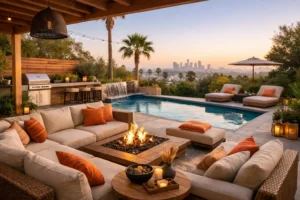
If the goal is to get more use out of the backyard, a built-in outdoor kitchen often delivers more value than people expect. It does not have to mean a luxury chef’s setup with every appliance available. In many homes, a well-designed grill station with storage, counter space, and a small sink is enough to make hosting easier and reduce trips in and out of the house. The key is placement. It should sit close enough to the interior kitchen to support entertaining, but not so close that smoke, noise, or crowding become a problem.
Fire features are another upgrade with strong everyday appeal. A fire pit or fireplace extends the yard into the evening and creates a natural gathering point. The choice comes down to how you use the space. Fire pits feel casual and social, while fireplaces create a more defined focal wall and can help anchor a lounge area. Gas systems are cleaner and simpler to operate, but wood-burning options may appeal to homeowners who want a more traditional feel, if local code and site conditions allow it.
Lighting deserves the same level of attention as hardscape and furniture. A well-lit backyard feels safer, larger, and more finished. It also helps expensive improvements disappear less at night. Layered lighting usually works best – path lights for circulation, overhead string or pendant lighting for ambiance, and accent lighting for planters, walls, or trees. Good lighting should support how the yard functions without making it feel overexposed.
The best layouts balance beauty and maintenance
A renovation should improve your home, not create a weekend chore list you regret. That is why low-maintenance landscaping is one of the most practical backyard renovation ideas Los Angeles property owners should seriously consider. Drought-tolerant planting, drip irrigation, mulch, and well-planned drainage can keep the space attractive while reducing water waste and upkeep.
Artificial turf is a common request, especially for families who want a green look without constant watering. It can work well in the right application, particularly for play areas or side yards, but it is not always the best solution for every property. It can retain heat in direct sun, and lower-quality products may look artificial over time. In some yards, a mix of decomposed granite, native planting, and limited real lawn creates a more natural and cooler result.
Raised planters and retaining walls can also do more than improve appearance. They help organize sloped yards, define outdoor rooms, and create opportunities for integrated seating. In hillside-adjacent neighborhoods or properties with uneven grading, these structural upgrades may be what make the yard truly functional. They also need to be built correctly. When drainage, footings, and permits are overlooked, cosmetic improvements can turn into expensive repairs later.
Privacy and comfort matter more than homeowners expect
One of the biggest reasons people avoid using their own backyard is lack of privacy. In denser neighborhoods, close property lines and second-story sightlines can make even a nicely finished yard feel exposed. That is why privacy planning should be part of the design from the start.
Fencing is the obvious answer, but it is not the only one. Horizontal wood fencing, masonry walls, privacy screens, tall planters, and layered greenery can all help create separation without making the yard feel boxed in. The best solution depends on the architecture of the home and the surrounding properties. A modern house may pair well with clean-lined screens and smooth stucco walls, while a more traditional home may benefit from hedging and warm wood tones.
Sound control is worth considering too, especially near busy streets. Water features can help soften background noise, although they add cost and maintenance. In other cases, thoughtful wall placement and dense planting do more practical work. These are the kinds of decisions that are easy to miss when a project is approached as a series of isolated upgrades instead of one coordinated plan.
Add value with flexible-use spaces
A backyard renovation can do more than make the home look better. It can expand the way the property functions. For families, that might mean a built-in bench near a play area, a shaded dining zone, or a durable open surface for gathering. For homeowners who work remotely, it may mean carving out space for a detached office, gym, or lounge structure.
If your lot allows for it, a detached backyard structure can be one of the most impactful investments on the property. Whether used as a guest room, studio, pool house, or future ADU conversion path, it adds flexibility that many families need. This is also where professional planning becomes especially important. Setbacks, utility locations, lot coverage rules, and city approvals can shape what is actually possible.
Pools are another major consideration in Los Angeles backyards. They can be a great fit for the right household and property, but they are not automatically the best use of space or budget. A pool can increase enjoyment and appeal in some markets, especially on larger lots, but it also reduces open-use area and increases maintenance and operating costs. Sometimes a smaller plunge pool or spa creates a better balance than a full-size pool installation.
Plan around permits, drainage, and construction reality
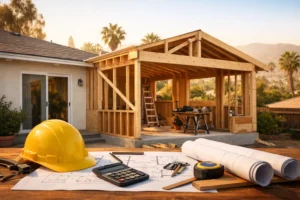
The most successful backyard remodels are the ones that work on paper before construction starts. That means understanding grading, drainage, access, utility runs, and local permit requirements early. Homeowners are often surprised by how many outdoor upgrades involve technical planning. Patio covers, retaining walls, outdoor kitchens, gas lines, electrical work, and detached structures can all trigger permitting or code review.
This is one reason a full-service contractor can save time and frustration. When design, planning, permitting, and construction are coordinated from the beginning, there is less risk of redesigns, scheduling issues, or mismatched expectations. A good renovation team should also help you prioritize. If the full wish list does not fit the budget, they should be able to tell you what to build now, what to rough in for later, and where cutting corners will create problems.
Budget should be approached honestly. High-end materials and custom features can transform a yard, but smart design often matters more than sheer spending. A clean layout, durable surfaces, proper lighting, and meaningful shade usually improve daily use more than loading the space with features that look impressive but get used twice a year.
For homeowners who want a yard that feels finished, comfortable, and easy to maintain, the best move is to think in terms of lifestyle first and materials second. A backyard should support dinners with family, quiet mornings outside, weekends with friends, and the long-term value of the home. When those goals guide the plan, the design tends to hold up better over time.
If you are weighing ideas, start by asking a simple question: what would make you use the yard more often next month, not just admire it after construction is done? That answer usually points you toward the right renovation.