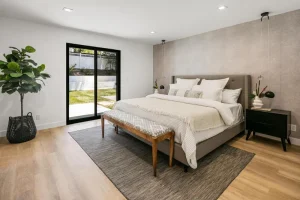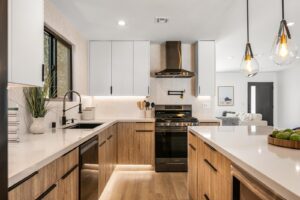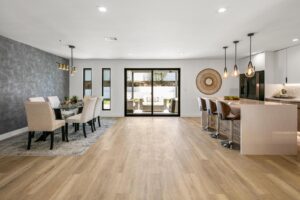
Open-concept floor plans are a hallmark of modern Los Angeles homes. They optimize natural light, enhance spatial flow, and create the indoor-outdoor experience Southern California homeowners value. Whether updating a bungalow in Silver Lake or a family residence in the San Fernando Valley, an open-concept remodel transforms both functionality and ambiance. At Level Up Contractor, we specialize in bridging the gap between design and structural integrity.
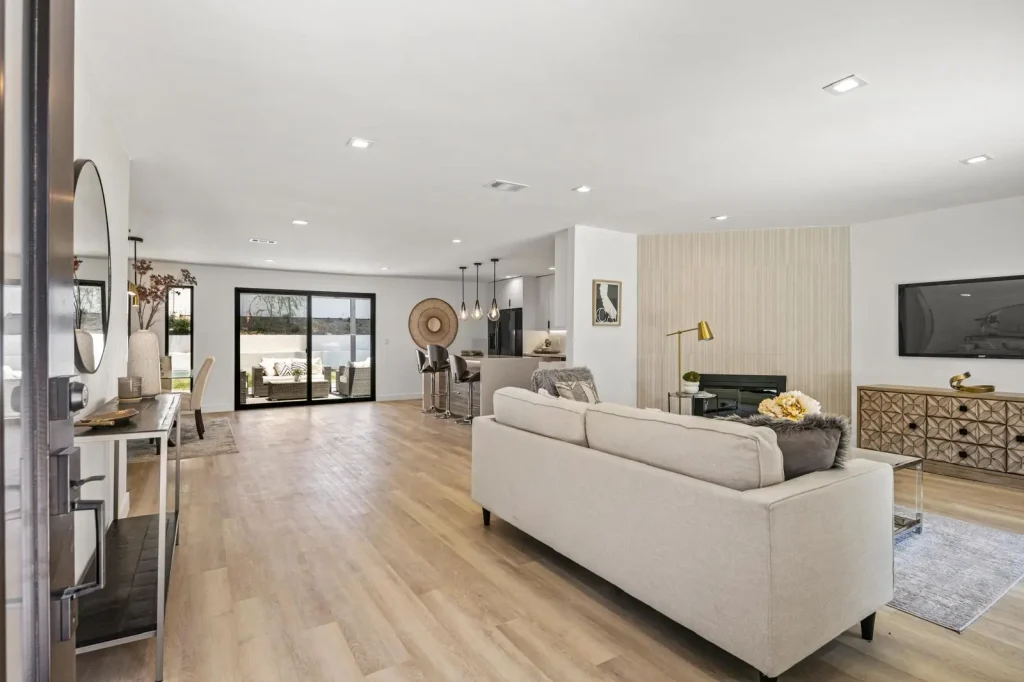
Why Open Concept Works in Los Angeles
In Los Angeles, where real estate is at a premium, removing interior walls significantly enhances the perception of size. Open layouts provide practical benefits, such as enabling parents to oversee children from the kitchen or facilitating effortless entertaining. In many older LA homes, kitchens were historically designed as isolated utility rooms. Modern living has shifted the kitchen to the center of the home, making the “great room” concept a necessity for today’s homeowners.
From a real estate perspective, open layouts are a top priority for buyers. Incorporating a planned open-concept remodel can improve daily living and increase property value. When a home feels larger than its actual square footage due to a lack of visual barriers, it stands out in the dense Southern California housing market.
Essential Planning and Structural Engineering
Open-concept remodeling requires a technical approach. Before any demolition begins, structural considerations must be addressed to ensure the safety of the residence.
1. Identifying Load-Bearing Walls
Many older homes in Los Angeles rely on interior walls to support the weight of the roof. Identifying these walls is the first step. When a load-bearing wall is removed, the weight must be redistributed. This is typically achieved by installing a structural beam—either an engineered wood product (LVL) or a steel I-beam.
2. Beam Placement: Flush vs. Dropped
Homeowners must choose between a “dropped” beam, which sits below the ceiling level, or a “flush” beam. A flush beam is recessed into the ceiling joists, creating a flat, uninterrupted plane. While flush beams are more labor-intensive, they provide the clean look that most modern Los Angeles remodels aim to achieve.
3. Seismic Considerations
Los Angeles is an active seismic zone. When you replace a wall with a beam, the load is concentrated onto specific posts. This requires reinforcing the concrete foundation beneath these posts with new pads to ensure the home remains stable during an earthquake. This engineering is vital for the permitting process in the City of Los Angeles.
Utilities Mapping and Relocation
Walls often conceal plumbing, electrical wiring, and HVAC systems. Relocating these requires expertise to avoid unnecessary costs.
- Plumbing: Moving a kitchen sink often means rerouting drain lines. In homes with a concrete slab, this may require trenching the floor, while crawlspaces allow for more flexibility.
- Electrical: Switches and outlets located on a wall marked for demolition must be moved. This is also an opportune time to upgrade the home’s electrical panel for modern appliances.
- HVAC: Heating and cooling ducts frequently run through interior walls. Removing these requires a creative HVAC plan to ensure the new open space remains comfortable without unsightly bulkheads.
Space Definition and Interior Design
An open plan should maintain functional zones to prevent the space from feeling like a warehouse. Strategic design choices delineate areas without compromising openness.
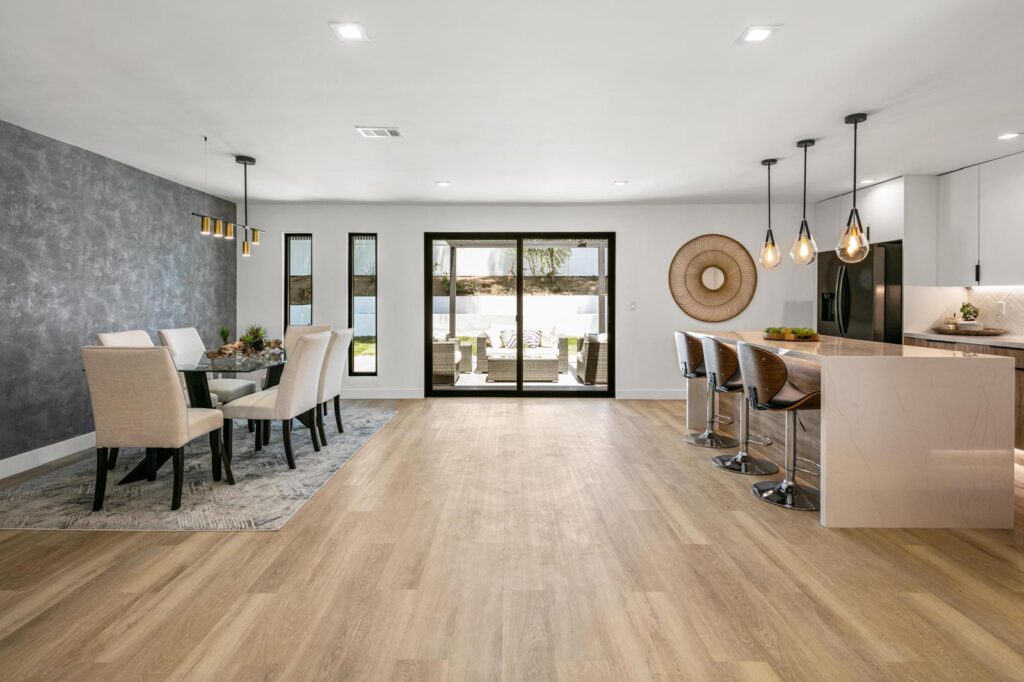
- Kitchen Islands: A large island serves as a natural boundary between the cooking area and the living space. It provides a visual anchor and a gathering point.
- Flooring Transitions: Consistent flooring throughout helps the space feel larger. However, subtle changes in material or large area rugs can define the boundaries of a living room versus a dining room.
- Custom Lighting: Lighting is the most effective way to define zones. Pendant lights over an island and recessed LED cans in the living area create distinct “rooms” through illumination levels.
Maximizing Natural Light and Flow
One advantage of open-concept layouts is enhanced natural light. In traditional layouts, sunlight is trapped in rooms with south-facing windows. Removing walls allows sunlight to reach the center of the home, reducing the need for artificial lighting during the day.
In Southern California, the backyard functions as an additional living space. Extending open layouts to outdoor patios maximizes the perceived square footage. We recommend pairing structural changes with larger windows or bifold doors. Using consistent materials—such as matching indoor flooring with outdoor pavers—enhances continuity.
Frequently Asked Questions (FAQs)
How can I tell if a wall is load-bearing?
Usually, walls perpendicular to joists are load-bearing. A professional contractor must verify this before demolition begins.
Do I need a permit for a remodel in LA?
Yes. Any structural changes or relocating utilities require a permit from the Los Angeles Department of Building and Safety (LADBS).
Will an open floor plan increase utility bills?
While spaces are larger, modern HVAC systems and Title 24-compliant windows help regulate temperatures effectively.
Is it expensive to move plumbing?
The cost depends on your foundation. Moving plumbing on a slab is more labor-intensive than in homes with crawlspaces.
How do I manage kitchen smells?
We recommend a high-CFM range hood that vents directly to the exterior to ensure odors do not linger.
Can I keep my existing flooring?
Removing walls creates gaps. Unless you have matching material, it is usually best to replace the area for a seamless look.
What is the average timeline?
The timeline depends on the specific project and varies based on the scope of work. A typical project takes 8 to 12 weeks, including structural work and final touches.